
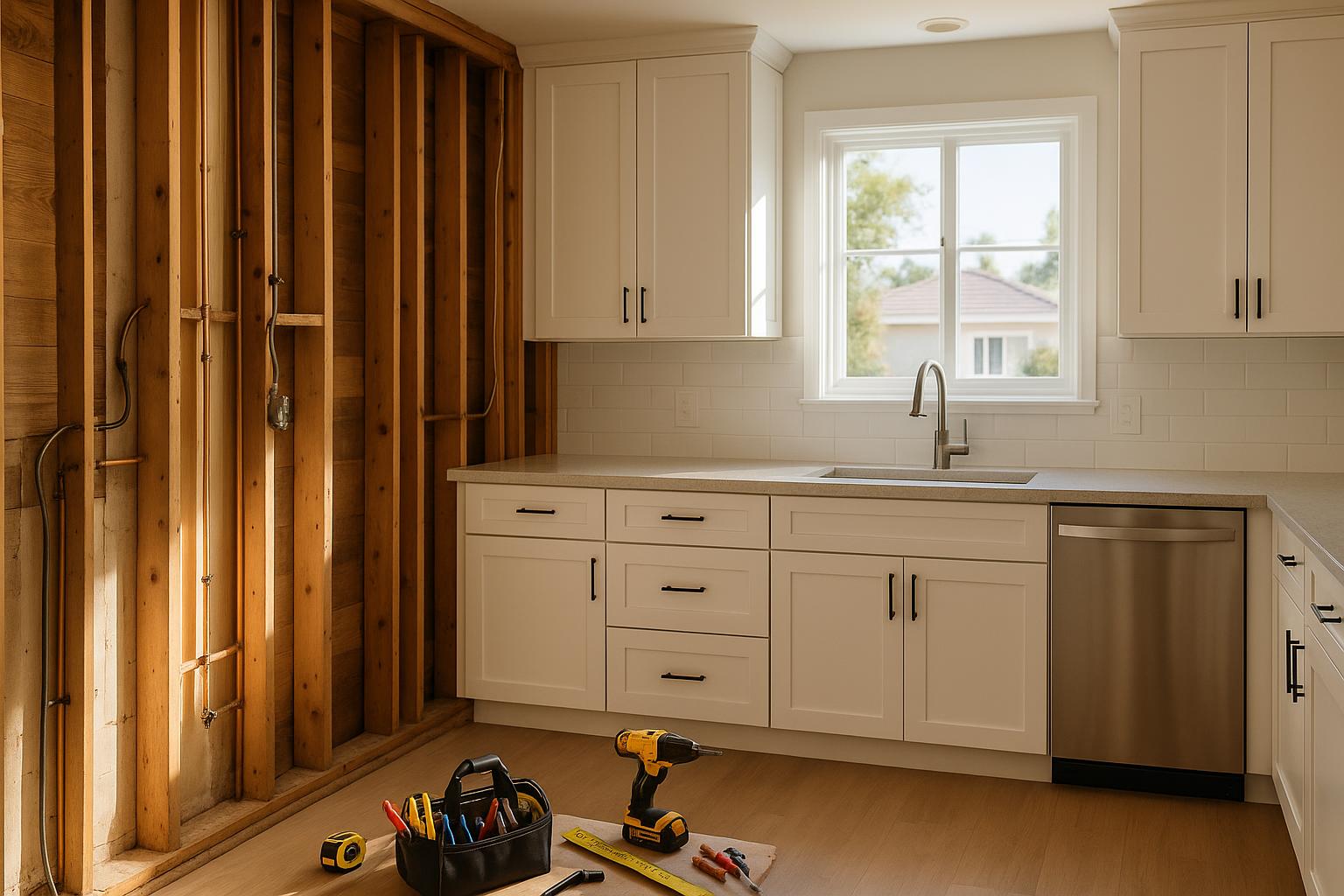
The Number One Question Every Homeowner Asks
Before homeowners ask about cost, design options, or even materials, there's one question that comes up in almost every consultation we have: how long is this going to take?
It's a fair question. A remodel disrupts your daily life. You need to plan around it — coordinating work schedules, figuring out where to cook dinner, or deciding whether to stay in the house during construction. Yet the answer you'll find online is almost always the same frustrating phrase: it depends.
While that's technically true, you deserve more than a vague response. After years of completing remodels across San Diego — from compact bathroom renovations in Clairemont to full-scale home additions in La Jolla — we've developed a realistic sense of how long projects actually take. Here's what you should expect.
Bathroom Renovation: 3 to 6 Weeks
A standard bathroom remodel is one of the faster projects, but it still takes longer than most people assume. If you're doing a straightforward update — new tile, vanity, fixtures, and fresh paint — you're looking at roughly three to four weeks of active construction.
If the project involves moving plumbing, expanding the footprint, or addressing water damage behind the walls (which is surprisingly common in older San Diego homes), the timeline can stretch to six weeks or more.
What Can Extend the Timeline
- Custom tile work or specialty materials with long lead times
- Permit requirements for plumbing or electrical changes
- Discovery of mold, rot, or outdated plumbing once demo begins
Our advice: order materials early and build a one-week buffer into your mental timeline. You'll thank yourself later.
Kitchen Remodel: 6 to 12 Weeks
Kitchens are the heart of the home, and they're also the most complex room to remodel. A mid-range kitchen renovation — new cabinets, countertops, backsplash, flooring, and updated appliances — typically takes six to eight weeks.
A more extensive kitchen remodel that involves removing walls, reconfiguring the layout, upgrading electrical panels, or adding an island with plumbing can push the timeline to ten or twelve weeks.
The Biggest Delay? Cabinets.
Custom and semi-custom cabinetry can take four to eight weeks just to fabricate and ship. This is why we always recommend finalizing your cabinet selection as early as possible in the design phase. If cabinets arrive on schedule, everything else tends to fall into place.
For homeowners in Pacific Beach and other San Diego coastal neighborhoods, we also frequently encounter older electrical systems that need upgrading before modern kitchen appliances can be safely installed. This is a code requirement, not an upsell — and it's better to know about it upfront.
ADU Construction: 4 to 8 Months
Building an accessory dwelling unit is a much larger undertaking than a room remodel. You're essentially constructing a small home from the ground up, complete with its own kitchen, bathroom, electrical system, and HVAC.
In San Diego, the ADU timeline breaks down roughly like this:
- Design and permitting: 4 to 10 weeks. San Diego's Development Services Department has streamlined ADU permits in recent years, but the process still requires patience and accurate plans.
- Site preparation and foundation: 2 to 3 weeks.
- Framing, roofing, and rough systems: 3 to 5 weeks.
- Interior finishes and inspections: 4 to 6 weeks.
All told, most homeowners should plan for a total timeline of five to eight months from initial design to move-in day. Garage conversions tend to be on the shorter end since the structure already exists, while detached new-build ADUs take longer.
Home Addition: 3 to 7 Months
Adding square footage to your home — whether it's a new bedroom, an expanded living area, or a second story — involves structural engineering, foundation work, and careful integration with your existing home. Timelines vary widely depending on scope.
A single-room bump-out might take three to four months. A second-story addition in a neighborhood like Escondido or Chula Vista, where lot sizes can accommodate vertical growth, could take six to seven months including the permit process.
Why Additions Take Longer Than Expected
- Structural engineering reviews add time before construction begins
- Tying new construction into existing rooflines, HVAC, and electrical requires precision
- Inspections happen at multiple stages, and scheduling depends on city availability
Whole-Home Remodel: 4 to 9 Months
A whole-home remodel is the most involved project we do. When you're updating every major system and surface in your home — kitchens, bathrooms, flooring, lighting, paint, possibly reconfiguring the floor plan — the timeline reflects that complexity.
For a typical whole-home renovation in San Diego, expect four to six months for moderate updates and up to nine months if the project includes structural changes, additions, or significant permit requirements.
Many homeowners choose to move out during a whole-home remodel, which actually helps speed things up. When contractors have full access to every room without working around occupied spaces, the workflow is more efficient.
What Causes Delays (and How to Avoid Them)
No matter the project size, certain factors consistently cause delays. Here are the most common ones and how to stay ahead of them:
- Indecision on materials: Finalizing your selections before construction starts is the single best thing you can do to keep your project on schedule.
- Permit backlogs: San Diego's permitting process has improved, but submitting complete and accurate plans the first time avoids costly revision cycles.
- Supply chain issues: While not as severe as during 2021-2022, certain specialty items still have extended lead times. Your contractor should flag these early.
- Unforeseen conditions: Older homes sometimes hide surprises — outdated wiring, termite damage, or non-code-compliant framing. A good contractor accounts for this possibility in the schedule.
- Change orders: Changing your mind mid-project is your right, but every change requires re-ordering materials, adjusting the schedule, and sometimes revising permits.
How to Set Yourself Up for a Smooth Timeline
After completing hundreds of projects across San Diego, here's what we tell every homeowner during the planning phase:
- Start planning early. The best remodeling timelines begin months before the first hammer swings. Use that time to finalize your design, select materials, and secure permits.
- Choose a contractor who communicates. Weekly updates, a clear schedule, and honest conversations about delays make all the difference.
- Build in a buffer. Add 10-15% to whatever timeline you're given. Not because something will definitely go wrong, but because real life rarely follows a perfect plan.
- Make decisions once. The fastest projects are the ones where homeowners commit to their selections and trust the process.
Ready to Start Planning Your Remodel?
At Golden State ADU, we give every San Diego homeowner a detailed project timeline during the estimate phase — not a vague range, but a week-by-week breakdown based on your specific scope of work. We believe you deserve to know what you're signing up for before construction begins.
Whether you're considering a bathroom refresh, a kitchen transformation, or a full ADU build, we're here to help you plan it right. Reach out to our team for a free consultation and let's put a realistic timeline on your project.